
Saratoga Directory Shelf and Scope
For Saratoga in Santa Clara County, California, the verified city directory shelf is broader than a single title. Newspapers can carry addresses, notices, family events, and property context. Yearbooks can anchor a classmate search. The Cunningham Collection and vertical files hold local books, clippings, brochures, papers, and city documents. A library staff member can confirm whether a requested title is digital, in-library, off-site, or missing.
| Collection | Years or coverage | Where held | Access and use |
|---|---|---|---|
| Saratoga Item | 1896–1899 | Saratoga Library digital local history | At-home and in-library links listed |
| Saratoga Springs Item | 1896–1897/1899 | Saratoga Library | Digital links; endpoint varies by interface |
| Saratoga Star | 1917–1922 | Saratoga Library | Digital |
| Saratoga Observer | 1958 | Saratoga Library | In-library digital access |
| Saratoga Shopper | 1955–2015 | Saratoga Library | In-library digital access |
| Cunningham Collection | Local-history span not enumerated | Saratoga Library | Onsite books and files; ask staff |
| Haines San Jose, Santa Clara County Criss-cross Directory | Cataloged “197?-”; observed 2018 volume | SCCLD system | In-library; West Santa Clara City and Suburban note |
| Federal census | Decennial schedules through 1950 | NARA and genealogy access points | Public under the 72-year release rule |
The table keeps verified runs distinct from an unverified Polk or telephone-directory series. The research did not establish an exhaustive annual Saratoga city directory inventory, so a missing title is a request to the library, not a reason to fill in a plausible publisher or year.
Saratoga Directory Newspaper Trail
The newspaper sequence gives the Saratoga directory project a local time line. The late nineteenth-century Item titles can use McCarthysville-era vocabulary. The Star run spans 1917–1922. The 1955–2015 Shopper run overlaps the postwar subdivision period and nearly the whole incorporated-city era. Social notices, school news, obituaries, advertisements, club reports, and property items can place a household in a date window even when a directory entry is not available.
Search by a street, subdivision, institution, or event as well as a surname. A person may appear under a spouse, parent, business, club, or former place name. Record the paper title, issue date, page, and exact wording. A clipping shows what was printed; it does not by itself prove a current address.
The Saratoga Library local-history page identifies the digitized runs and access limits. Some links work at home, while others require a library visit.
The Saratoga Historic Preservation inventory is the source for the historical resource view below.
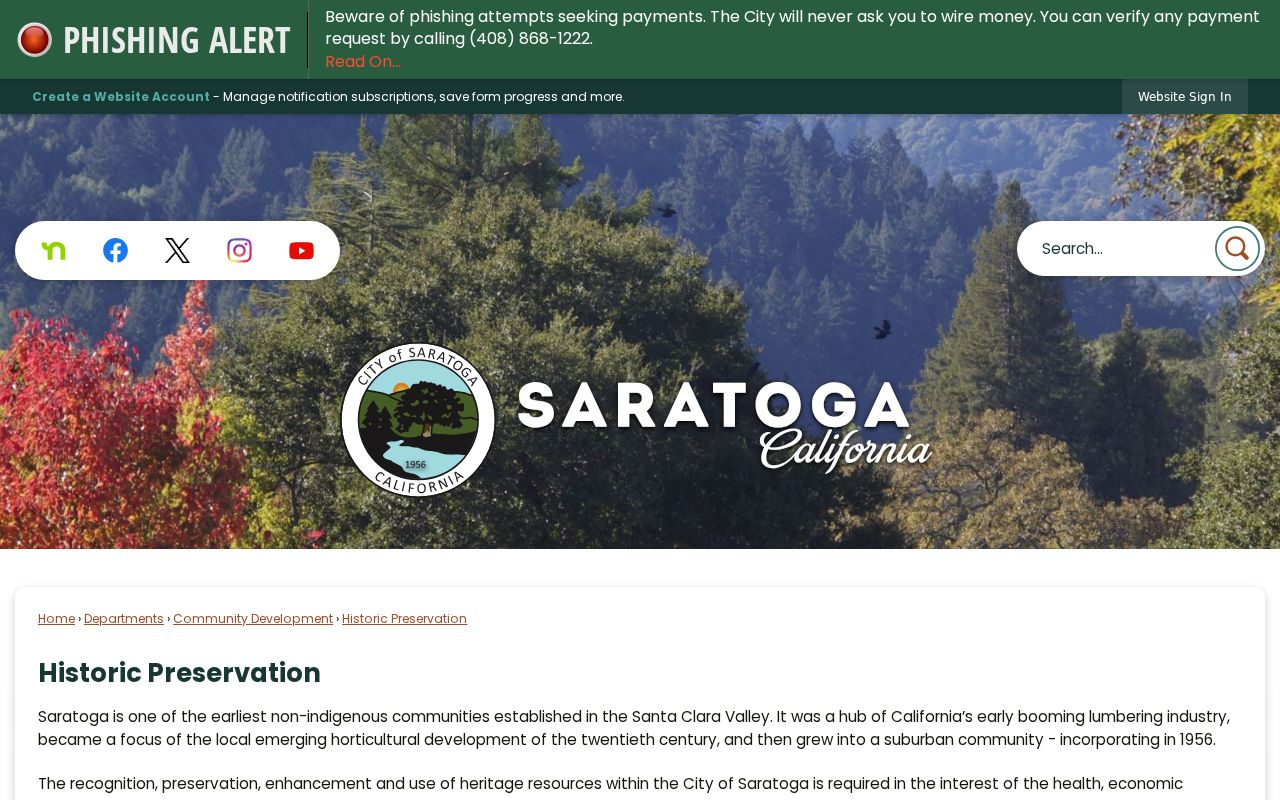
The City's preservation resources pair well with newspaper dates when a property or family story crosses several eras.
Saratoga Haines Directory Lead
The SCCLD catalog names Haines San Jose, Santa Clara County Criss-cross Directory, published by Haines and Company, Inc. The catalog entry is marked “197?-” and notes that it contains Haines West Santa Clara City and Suburban Criss-cross Directory material. The observed 2018 call-number volume is R 917.947 HAINES 2018 and is for in-library use. This is an address-and-telephone finding aid that may cover a Saratoga address in the relevant edition.
The catalog does not list every annual volume, prove that every edition includes Saratoga, or expose an actual sample entry. Ask Saratoga Library at 408-867-6126 for the precise year, publisher, call number, coverage, missing years, and copying rules. The question is especially important when a modern Saratoga city directory search is being used to trace a household backward.
The Haines catalog record is a source for the title and access note, not a substitute for inspecting the page.
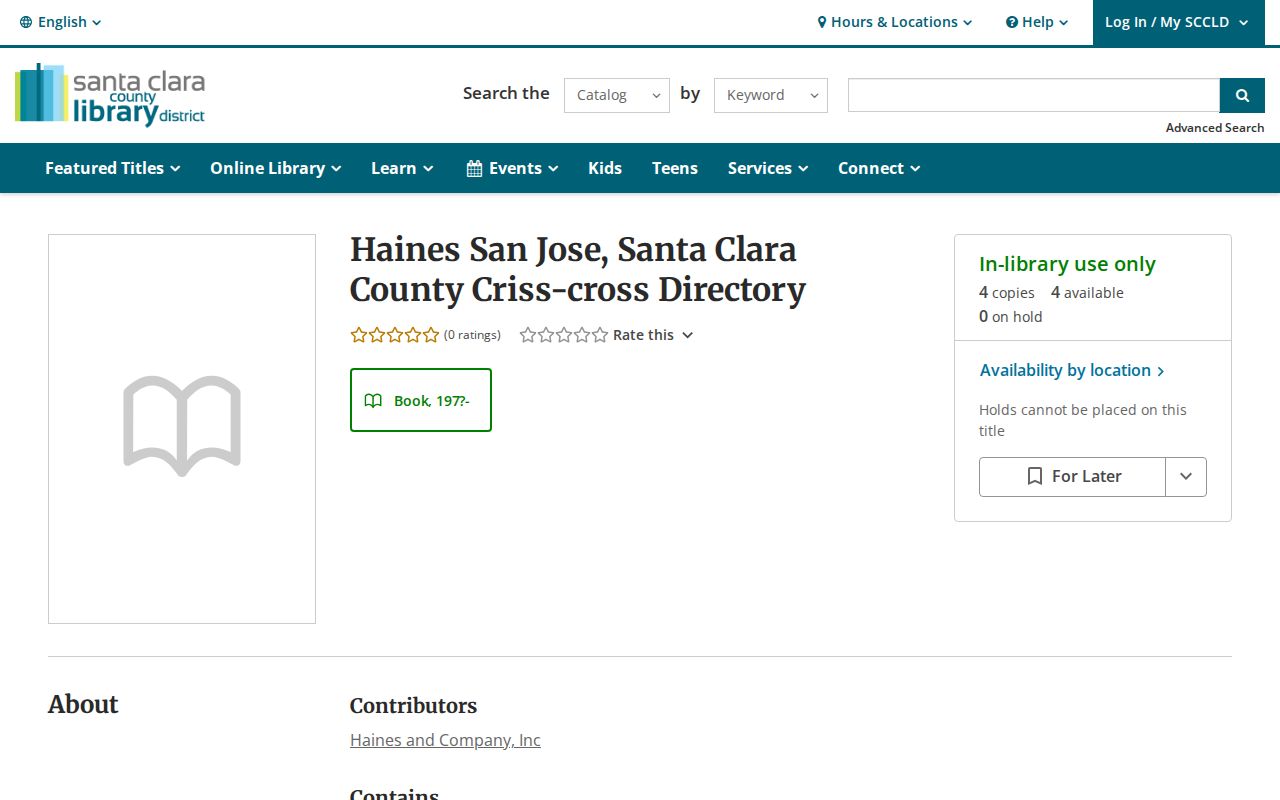
The catalog identifies the volume while leaving local coverage for the library shelf.
Saratoga Entry Evidence in Print
A printed directory entry should be transcribed before it is interpreted. The research inspection did not include an actual Haines page, a verified local entry, or an abbreviation key. It therefore does not establish that a Saratoga city directory entry displays an occupation, spouse, employer, owner or renter symbol, widow notation, or telephone in a particular format.
When a volume is obtained, record the publication year and publisher first. Then note the printed name order, address, phone detail, cross-reference marks, abbreviation key, street section, and any status or household notation exactly as shown. Put uncertain marks in brackets in the research notes rather than expanding them by guesswork.
| Name | Unresolved; actual Saratoga directory page not inspected. |
|---|---|
| Occupation | Unresolved; do not claim it appears. |
| Spouse | Unresolved; no local page or key was inspected. |
| Address or telephone | Unresolved; confirm the volume's format. |
| Owner/renter marks | Unresolved; verify any symbol in the key. |
| Abbreviation key | Unresolved; inspect before interpreting marks. |
- Criss-cross directory
- An address or telephone finding aid that can move from a street clue toward a name, subject to the volume's coverage.
- Householder index
- A name or household finding aid; the title and local rules determine who is included.
- Abbreviation key
- The publisher's guide to symbols and short forms. It must be inspected before a mark is given a meaning.
- Index versus image
- A catalog or result can identify a volume while the printed page supplies the evidence.
Evidence rule. A catalog record establishes a title and access note. It does not establish the fields printed inside an uninspected volume.
Saratoga's Earlier Directory Geography
Saratoga's earlier names are practical directory keywords. The post office began as McCarthysville in 1855 and was renamed Saratoga in 1865. Historical references can also use McCartysville, Tollgate, or Bank Mills. William Campbell's sawmill at Saratoga Creek began in 1848; Martin McCarty leased it in 1850 and built a toll road. Orchards, mills, resorts, and early village buildings shaped the records before a modern city boundary existed.
Use the old name in newspapers, census tools, library catalogs, and historical-foundation requests. A nineteenth-century household may appear under a postal or township geography that does not match the incorporated city created in 1956. That is not a missing family. It is a jurisdiction and naming problem.
The official Saratoga history supplies the civic vocabulary needed to search older sources.
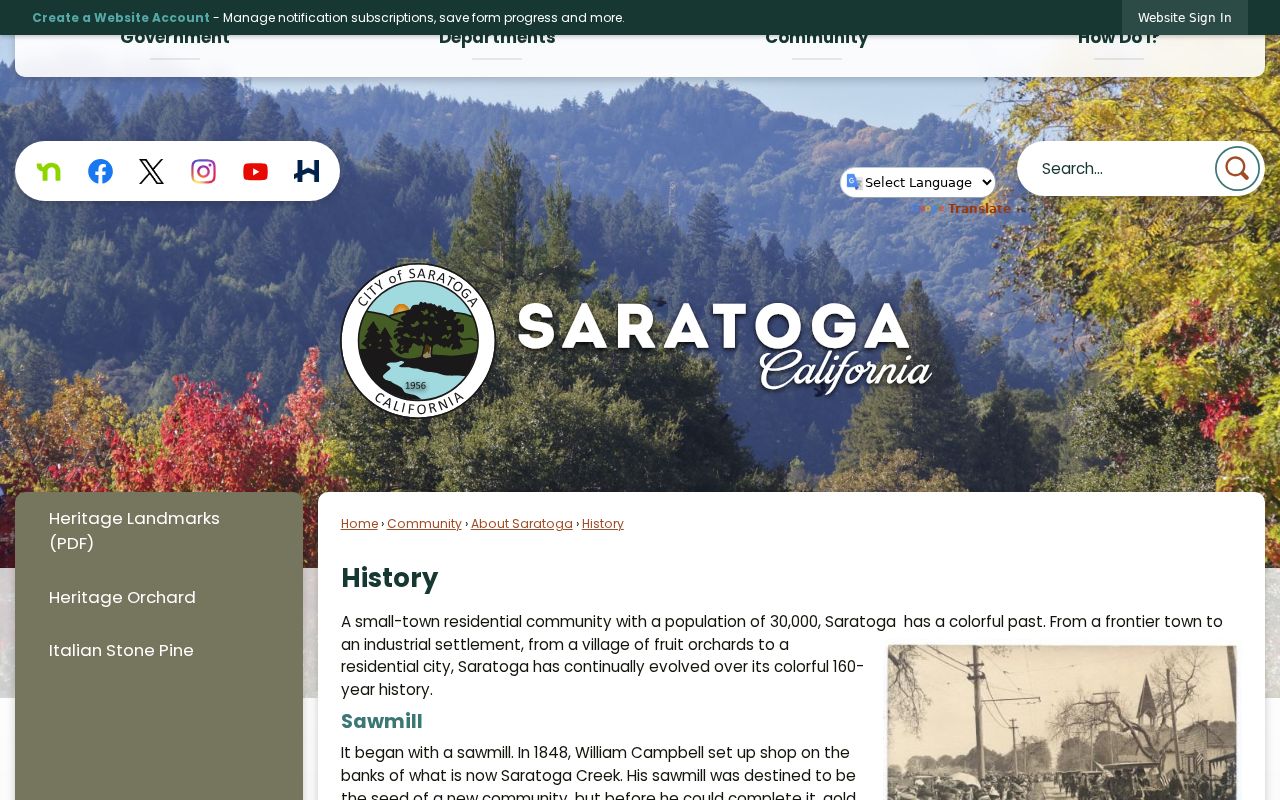
The City's history material supplies the civic vocabulary needed to search older Saratoga records without forcing a modern place name onto an earlier source.
Saratoga Directory Classmate Trails
Yearbooks are one of the clearest human-use companions to a local directory search. Saratoga Library identifies yearbooks among the Cunningham and local-history materials, but the exact titles and years are not posted. Ask staff for the school, year, call number, branch, and any viewing or copying rule. A class photo or name line can establish a school connection at a date without exposing a current address.
Pair the yearbook with a dated newspaper item, then check a vital, probate, court, or property source that fits the purpose. Compare middle names, relatives, schools, dates, and place names. Stop when the evidence remains ambiguous. A former classmate trail is useful because it starts with a shared event and a bounded year rather than a broad present-day search.
SCCLD also provides Ancestry Library in-library, HeritageQuest through library-authenticated access, Fold3 Library Edition, Mercury News archives, Digital ReeL, and other genealogy resources. Confirm branch access before travel.
The SCCLD genealogy gateway is the source for those database access routes.
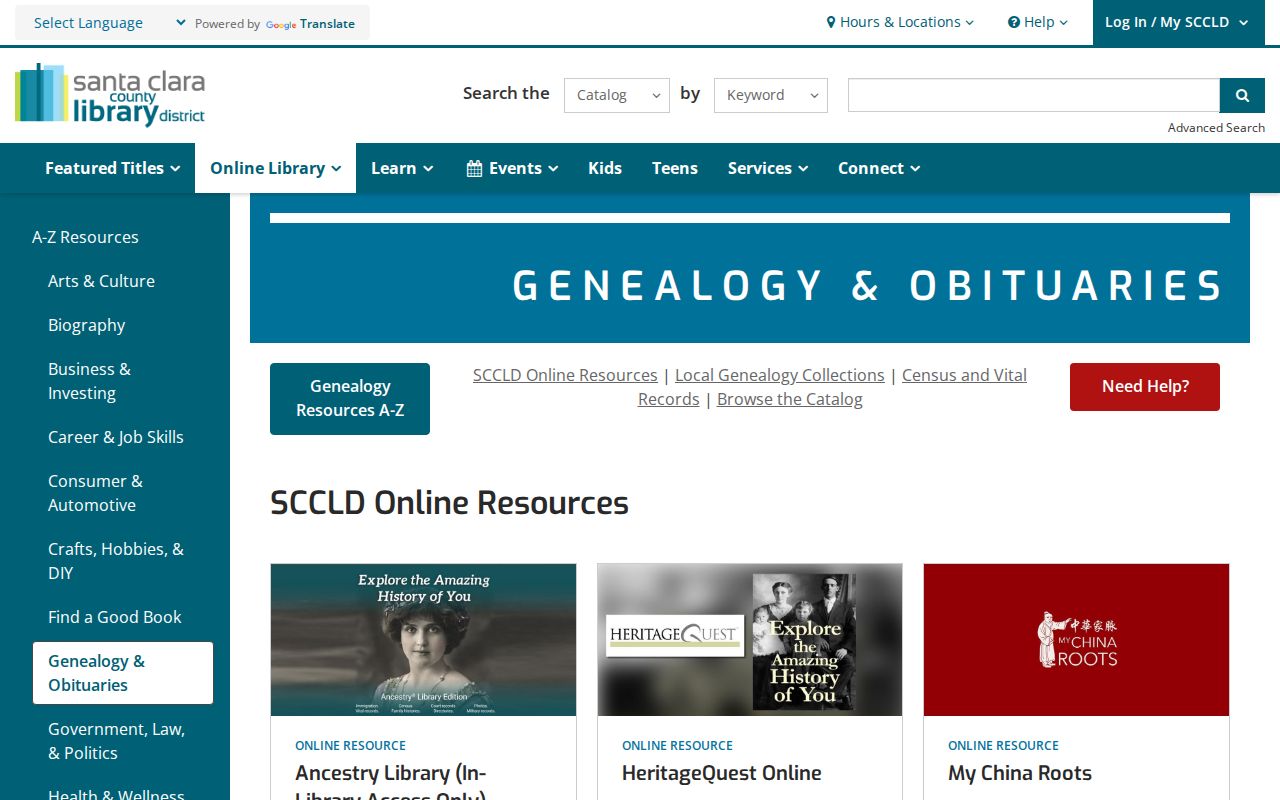
The county genealogy gateway shows how a yearbook clue can sit beside census, military, immigration, and family-history sources without replacing a local custodian.
Saratoga Heritage Files for Directory Clues
City Heritage Resource Evaluations are an unusual address-indexed companion to the historical collections. The City indexes evaluations for historic properties on Big Basin Way, Fruitvale Avenue, Oak Street, Saratoga Avenue, Saratoga–Los Gatos Road, Saratoga–Sunnyvale Road, and other streets. A report can supply construction history, prior ownership or use, architectural context, and neighborhood development.
Use the street and parcel clue to find an evaluation, then compare its dates with newspaper items, permits, deeds, and a directory or criss-cross entry. The evaluation is a narrative about a resource, not a comprehensive list of everyone who occupied it. Its value is the bridge between a fixed address and the older story attached to that address.
The address-indexed evaluation collection is free to consult.
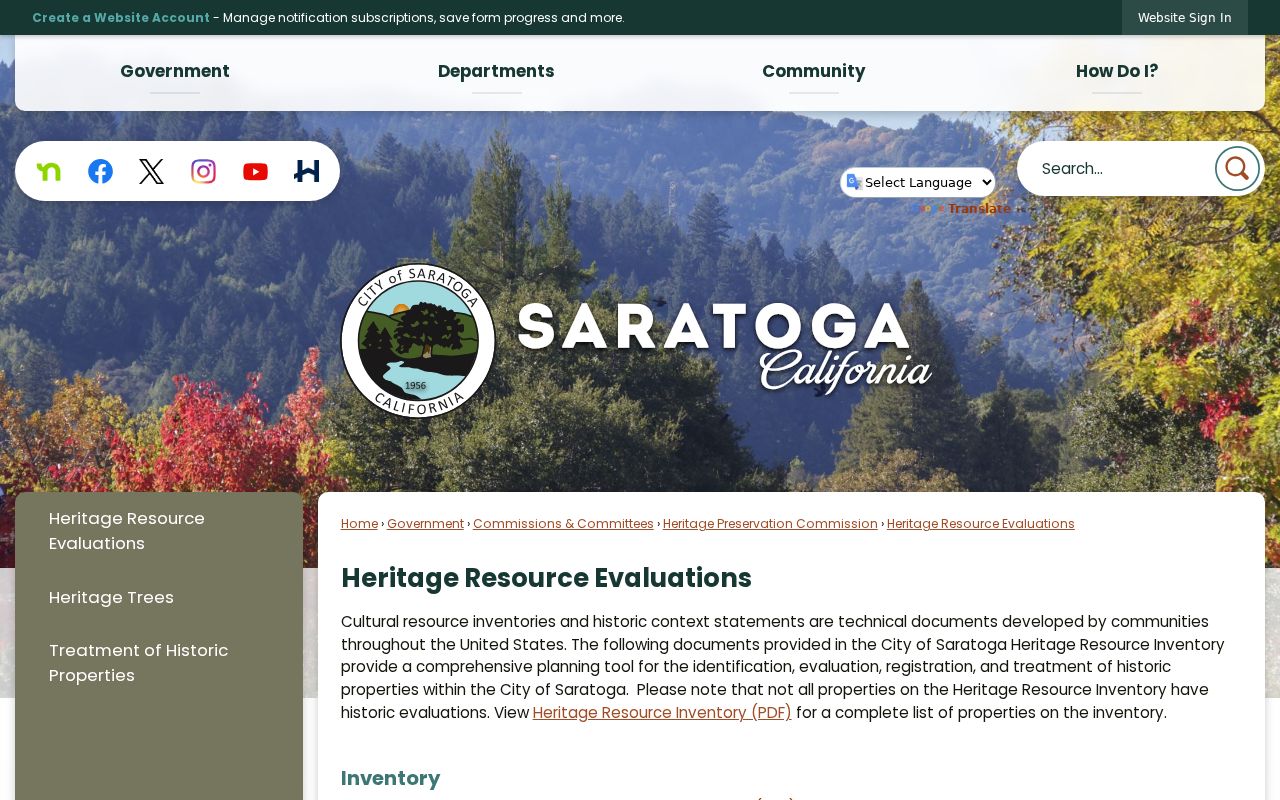
The evaluation view shows why a street address can lead to local history even when no complete directory run survives.
Tracing Saratoga Households Across Directory Years
Historical directory research works as a sequence of dated snapshots. Begin with the exact address and postal or municipal jurisdiction. Choose a verified newspaper, yearbook, or criss-cross source near the target year. Transcribe the entry or clipping exactly. Compare the next available year for an arrival, departure, spelling change, or address shift. Then pair a 1940 or 1950 result with the corresponding federal census, keeping in mind that historical Saratoga boundaries differ from the incorporated city.
- Set the target year, address, and place-name variants.
- Ask the library for the exact volume and record the call number and access condition.
- Capture the printed name, street, date, and symbols without expanding unknown abbreviations.
- Compare adjacent directory or newspaper years and note what changed.
- Use deeds for ownership, census for a released household snapshot, and obituary or probate material when the trail ends.
The census is public through 1950 under the 72-year rule. Later material may require a different source. A city directory result and a deed result should be kept in separate columns because one may describe an occupant clue while the other describes a property interest.
Saratoga Directory Research Timeline
The local timeline explains why an old address can move between county, postal, school, and city labels.
| 1848–1865 | Mill, toll-road, Bank Mills, McCarthysville, and early creek-industry vocabulary. |
|---|---|
| 1865–early 1900s | Saratoga post-office name, Pacific Congress Springs, orchards, and early village references. |
| 1896–1922 | Verified Item and Star newspaper runs in the local-history collection. |
| 1955–2015 | Verified Saratoga Shopper run, with the 1956 incorporation era inside it. |
| 1956 onward | City planning, permit, preservation, and modern parcel systems grow alongside County deeds. |
No first or last printed Saratoga city-directory year was verified. Preserve that gap and ask the librarian for the missing Polk, telephone, reverse, or criss-cross inventory rather than presenting an unsupported series as fact.
Requesting Saratoga's Directory Inventory
A precise library request can resolve the largest remaining Saratoga city directory gap. Ask for “city directories,” “telephone directories,” “reverse/criss-cross directories,” the publisher, inclusive and missing years, call numbers, off-site storage, copying rules, and whether the entry geography covers Saratoga separately or inside San Jose or Santa Clara County suburban editions. Include the street, surname, era, and former place name.
The Saratoga Historical Foundation museum and archive is another local contact for photographs, family files, maps, and topical research. Its museum is at 20450 Saratoga–Los Gatos Road and the published phone is 408-867-4311. Official sources differ on the McWilliams House date, with the Foundation saying 1852 and a City park page saying 1865. Keep that conflict visible when it matters.
Record a supplied volume's metadata before reading it, so one unverified entry does not become a broad claim.
For modern address-keyed work, move to the Saratoga street directory page. For a one-person confirmation, use the Saratoga resident lookup workflow.